Showing posts with label Race. Show all posts

Tuesday, January 24, 2012

A Missisippi Mess

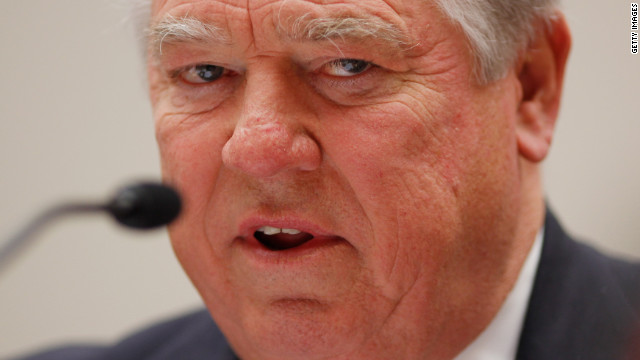
Mississippi Gov. Haley Barbour pardoned four convicted murderers before leaving office

Good Ole boy Haley Barbour really stepped in it during his last days in office as governor. Barbour issued 215 pardons and the uproar was deafening. Barbour, a former RNC Chair and lobbyist, long popular with right-wing Republicans came under immediate attack for releasing murderers and other violent criminals. The state attorney general filed a complaint alleging that 156 of the pardons were unconstitutional because state law requires a 30 day public notice in the communities where the crimes occurred. A judge refused to send those pardoned back to prison, but ordered those convicted of murder to check in with parole officers. A hearing has been scheduled for February 3. More about the legal challenges here.
 
The uproar got so bad, Barbour wrote a commentary in the elitist liberal Washington Post, pointing out that the Parole Board had recommended 90 % of those pardoned receive some sort of clemency and that previous governors had a long history of pardoning trustees who work in the governor’s mansion. Here’s Barbour’s attempt to set the record straight.
 
Missing from most of the heated verbal and online confrontations—is that just like most things in Mississippi, the pardons have an ugly racial tinge. Fully two out of three prisoners pardoned by Barbour were white--- even though the state’s prison population is two-thirds African-American. Barbour’s staff insist that race played no role in the decisions, as did the Parole Board. Statisticians who have looked at Mississippi’s pardon process overall say white prisoners are four times likelier to be paroled than African-Americans. Reuters initially broke the story about the racial discrepancy and it was picked up by the Huffington Post.
 
The fallout continues as Barbour’s successor, Republican Phil Bryant, has not only vowed to refrain from pardoning convicted prisoners—he has vowed to bar them from working in the governor’s mansion or grounds. While the rhetorical fallout continues—one place Barbour won’t be hurting is his wallet. He’s already given the first speech in a lucrative speaking contract with Leading Authorities in the $30,000-$50,000 range. This is only one of the former governor’s new jobs. Barbour has also rejoined his old law firm Butler Snow and the lobbying powerhouse BRG according to today's New York Times.
 
In case you’re wondering about the two  Scott sisters who Barbour granted an early release after a decade of appeals from state human rights groups—they’re still under court supervision. Jamie and Gladys Scott were paroled after serving 16 years of a life sentence, on the condition that Gladys donate a kidney to Jamie. The two African-American sisters still have to report to a parole officer and with a felony conviction have found it impossible to find work. Maybe Barbour can turn some of his speaking gigs over to them.

By: Llenda Jackson-Leslie

Friday, November 11, 2011

Diversity: Segregation IS Natural

Diversity: Segregation IS Natural


segregate (v): to separate or set apart from others or from the main body or group; isolate


It is time to be really real with each other...we are more comfortable with our own kind, and it is okay. It is natural.


Look at nature, lions roam the plains with lions, wolves run in packs with other wolves and even ants build highly structured colonies with other ants. Segregation is natural. It is only in the most complex ecosystems, such as a rain forest, where multiple species co-exist, interact and depend on each other. For them, integration is natural. 
 

As we are all homo sapiens, shouldn't it be easier for us to co-habitate?


This is where the rubber meets the road...we have to move above and beyond what is natural and comfortable for our own ever-increasingly complex ecosystem to survive and flourish. The troubling part is the breadth and depth of segregation, it permeates every part of American society and culture. For most of us it is an unconscious way of life. Consider Sunday, it the most segregated day of the week. Monday through Friday we labor side-be-side, have lunch together and my imbibe at a happy hour with each other. On Saturday, our children play soccer together, we shop, go the movies and co-mingle throughout the afternoon. But Sunday is a very different thing for most of us. Race-based denominations, congregations and conventions abound:


This is in no way meant as an indictment of religion, faith, denominations, congregations, etc. These organizations and their founders were forced to segregate because of prejudice and fear in the 18th and 19th centuries, and while they are open to all, the members are still predominantly Black. And there are countless unforced examples in our lives:

  • white music (country, bluegrass, metal) and Black music (R&B, hip hop, neo-soul)
  • white entertainment (Everybody Loves Earl and opera) and Black entertainment (Meet the Browns and go-gos)
  • white sports (hockey, lacrosse and swimming) and Black sports (basketball, football and boxing)

There are the so-call exceptions for each of these categories, you know who they are, the "blue-eyed soul brother" or the "Black diva."
 

Yes, yes, yes...let's just admit it, put it out in the open...we prefer being with others like us. We feel welcome, safe and empowered; we are in our comfort zones with others like us. However, consider this, "If you put yourself in a position where you have to stretch outside your comfort zone, then you are forced to expand your consciousness." ~Les Brown
 

How will you move beyond your comfort zone?


What one thing can you do to make your life more integrated?

Wednesday, October 5, 2011

What’s In A Name...A Heck Of A Lot

What’s In A Name...A Heck Of A Lot


Whether Governor Rick Perry saw the stone, whether he or his father had it painted over or whether or not it was done before or after he got the lease is really inconsequential to me. What does matter is the heart and mind of those who live in that community and across this country who believe, “It’s just a name....”

For anyone to say it is “just a name,” as Haskell County Judge Davis asserts, ignores my history, condescends to my intelligence and dismisses my feelings. It is easy to be dismissive and say, “he doesn’t get it and he’s not trying to get it;” however, as a person of authority in his community, he has to “get it.”
He, and so many white men in positions of authority, with the literal lives of people of color in the balance have to “get it” if no one else does. Judge Davis, are these acceptable names as well?

Camel Jockey Junction
Chink Channel
Cracker Crossing
Dago Desert
Dyke Depot
Dink Hill
Faggot Forge
Guido Gulf
Half-breed Highway
Honky Outlook
Hymie Crossing
Mick Mountain
Polack Passing
Raghead Road
Spic Pass
Wetback Waterway

If not, then why is Niggerhead?

If so, then we clearly understand who and what you are your honor.


Thursday, September 8, 2011

Divided We Fall


Centuries later, Aesop’s famous quote still holds true, yielding inspiration for unity even as our patriotic sense of community ebbs and flows: “United we stand, divided we fall.”

But our nation is falling.

Children return to school, resuming daily recitations of the Pledge of Allegiance, but the notion of our country being “indivisible, with liberty and justice for all” seems illusory at best.

A report released Tuesday shows that the country remains starkly divided in outlook toward one of its most distinguishing qualities: diversity.

According to the report, “What it Means to be American,” only 17 percent of Whites believe discrimination against minorities is a critical issue. Contrarily, 51 percent of Whites believe discrimination against them is as big a problem as it is against minorities. Meanwhile, 42 percent of Hispanics and 53 percent of Blacks believe discrimination against minorities is a critical issue.

In our determination to amend our nation’s past racial indiscretions, have we instead created a setting ripe for vain accusations?

Granted there are grave statistics to support some claims of discrimination – take the recent finding that Black men are more at risk than any other demographic to fall out of middle class, or the report that Hispanics make up more than half of all people sent to prison for felony crimes so far this year, for example.

It’s hard to imagine a country that is truly indivisible, serving justice for all when everyday reminders of our racial differences become negative reinforcements of stereotypes rather than uplifting foundations for growth.

Indeed, just “10 years after September 11, 2001, we seem far less united as a nation.”

Thursday, September 1, 2011

Diversity: Seeing in Color


Diversity: Seeing in Color


Do a Google News search for “diversity” and the results are as varied as the word itself implies. But one thing most of the resulting articles have in common is the acknowledgement that for whatever reason, in whichever industry or field being discussed, diversity is lacking.  

Why is that? If so many people, communities and leaders are talking about diversity – more specifically about improving diverse racial representation – why are the results not there?

One answer may be that too many people are adopting a form of enlightened ignorance: The idea that ignoring race equals approaching everyone with equality and therefore eliminating racial bias and discrimination.

It’s not hard to find examples of this – take a look at Forbes contributor Bill Frezza’s response to the recent NIH grant study, for instance. Frezza argues that, among other things, because the “peer-review process is entirely colorblind, with reviewers having no indication of an applicant’s race,” there is no reason to cry foul. Even as he admits that Blacks are underrepresented in the medical and science fields, and that the community “would be well served if many more students graduated high school, went to college, pursued advanced degrees and considered degrees in science,” he asserts that it would be utterly preposterous for the NIH to “fall for” applying such advances as Affirmative Action and other racial quotas to its review processes.

Frezza’s viewpoint, as common as it is, misses the mark in a major and extremely detrimental way. Given the sensitive history of minority populations suffering abuse at the hands of the majority, popular culture’s attempt at making amends by way of strengthening pride in racial diversity cannot be attained by simply adopting colorblindness. Putting a car in neutral after driving it in reverse doesn’t mean it’s all of a sudden moving forward. Diversity must be consciously driven.

True diversity can only be attained through a sincere effort to see and acknowledge race and then act against the abounding disparities that accompany it.

Frezza is right about one thing: it is a downright shame that minorities remain underrepresented in such advancing industries, and the Black community would most definitely benefit if more of its members had access to higher educational and employment opportunities. But that very notion serves to explain why ignoring race won’t do much to mend discrepancies.

How can we expect the members of our minority communities to truly reach equal levels of potential – including receiving government grants and funding – by ignoring the fact that they often begin with an opportunity deficit in many steps along the way?

Thursday, August 4, 2011

Weekly Poll: Do We Really Want a Color-Blind America?

Weekly Poll: Do We Really Want a Color-Blind America?

Color-blind America?  It sounds great, but do we Americans really want to give up our own self-interests?  Do we want to want to subjugate our needs, our families’ needs, our special interests to some ‘greater’ (or at least larger) good?  And should we?
 
 
This week, when the National Association of Black Journalists (NABJ) meets in Philadelphia, it’s sure to come up that MSNBC is about to hand its coveted prime time 6 PM time slot to the Rev. Al Sharpton—a “non-journalist celebrity” as he has been called by any number of more experienced, capable black journalists.
 
 
And what about the ongoing criticism that President Obama avoids weighing in on such critical issues as the soaring rate of black unemployment and the widening wealth gap between blacks and whites?  Does he get a pass with, “I am the President of all Americans”?  By the way, the President sent a dozen reps to the NABJ meeting.
 
 
On the flip side, there will be nothing but kudos for Mayor Bloomberg , who has pledged both his own and New York City’s funds to help Black and Latino youth.  And so it should be.  a city program targeting young Black and Latino males
 
 
Can we have it both ways?  What do you think?  Do we really want a color-blind America?


 YES ______                          NO _____

Diversity: Are We Self-Segregating?

[A screen shot of the DC metro area by race. How does your neighborhood compare?]

Diversity: Are We Self-Segregating?

A study released this week revealed that “affluent Blacks and Hispanics live in neighborhoods that are noticeably poorer than neighborhoods where low-income Whites live.”

The study, by Brown University Sociologist John Logan, relied on census data from 2005 to 2009 to show that (with the exception of the District and Atlanta, where Blacks and Hispanics who are well-off still live in neighborhoods of equal status to low-income Whites and Asians), segregated neighborhoods are still a very prominent reality throughout our nation.
"Separate translates to unequal even for the most successful Black and Hispanic minorities… African Americans who really succeeded live in neighborhoods where people around them have not succeeded to the same extent," said Logan.
At a time when the wealth gap between Whites and minorities is at its highest, should we be concerned about the implications and causes for these housing disparities? Or is it possible are we self-segregating as a means to cope and maintain a sense of unity in our common struggles?

Wednesday, July 27, 2011

Reexamining Gentrification

Reexamining Gentrification

During his town hall last week, an audience member questioned President Obama’s views on gentrification and its role in our communities. Among other things, Obama said called it a most likely “welcome problem,” for many suffering neighborhoods in this economy.

But why would gentrification be viewed as a problem in the first place? Because society misunderstands it. The general notion these days is that a gentrification occurs when whites begin to increasingly occupy traditionally urban, Black neighborhoods.

But it’s really about “when a middle-class person moves into a poor neighborhood,” says Charles Wilson, president of the Historic Anacostia Block Association. In an article today by The Washington Post, Wilson says he realized after reading the definition of gentrification that as a Black man he is still “a gentrifier.”

The article highlights an important aspect of Black culture that is too often lacking in present economic and political discussions – by taking pride in our communities, we have the power to improve our surroundings.

While the notion of gentrification “makes so many people uncomfortable,” does it really have to? Should the African American community begin to claim the g-word as its own?